
7 October 2026
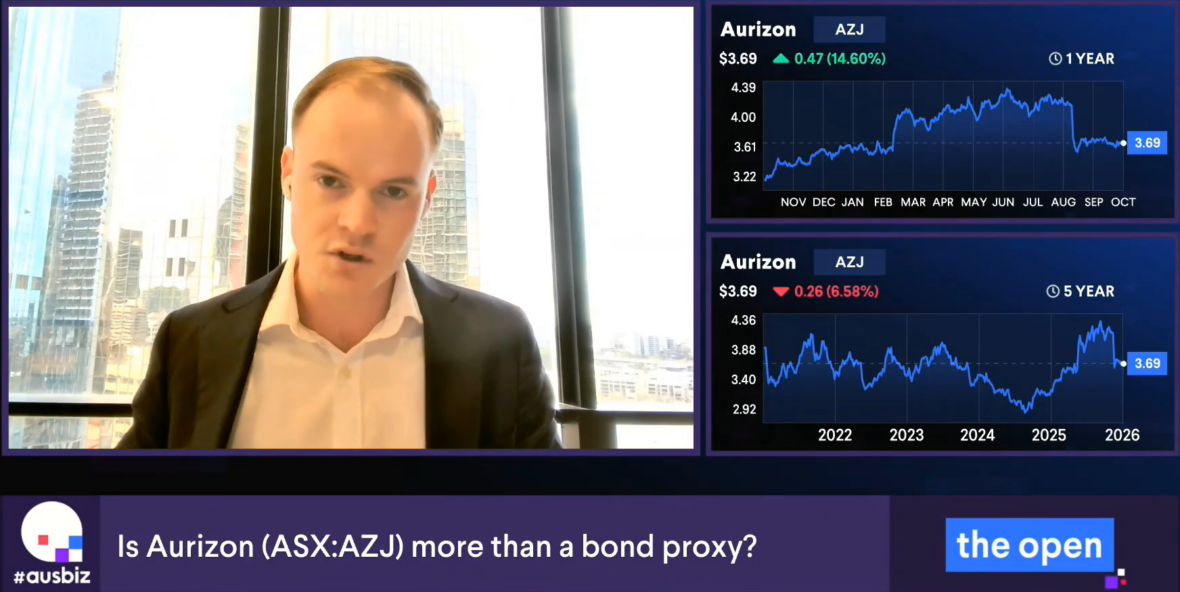
Our Portfolio Manager Daniel Martin recently joined Ausbiz to discuss where we see mispriced opportunities. Much of the market’s attention is on the Firmus IPO at the moment, and several of the defensive names that served portfolios well into 30 June have since traded sideways or given back some ground. With interest rates still a live question, and talk of cuts within 18 months looking ambitious to Daniel, we are focused on businesses with deeply entrenched assets that are close to impossible to replace and that are still growing and improving margins.
Aurizon fits that description. Shareholders were well rewarded through the first half, but the stock has since moved sideways as investors weighed BMA’s lower coal volumes and FY27 guidance. It now trades at around 13 times EBIT, while North American peers trade at around 20. Daniel doesn’t think the market is giving much credit for the below-rail network, a regulated asset base that would be close to impossible to rebuild. He also thinks the market is misjudging how long coal will keep running above rail, and that the bulk business is finally delivering, with operating margins moving towards 20%. A forward yield of about 7%, even with a step down in coal assumed, pays investors while they wait. Daniel sees it as worth a small position now, with more to add once there is greater clarity on interest rates.
Woodside is a different setup. The share price rose from around $22 to $28 ahead of the conflict in the Middle East, then to $35 afterwards, and has since drifted back to around $31. Scarborough comes online in the fourth quarter, with Trion and Louisiana to follow. Eighteen months ago the market punished Woodside for its LNG push, its broader geographic footprint and peak capex. Since then the company has walked away from its planned ESG spend, including a sell-down of its Beaumont ammonia project, which frees up around $2.5 billion. That money can either reduce debt or go back into projects with strong returns.
Daniel also sees support for LNG in the lessons of the recent conflict, which put energy security at the top of the agenda, and in the gas demand coming from data centres. He was surprised Woodside hasn’t kept pace with its North American peer. The main overhang he pointed to is Australian government policy on domestic energy security and what it might mean for local assets.